
Make good locally
May suit limited chases where the adjacent plaster is stable and the repair can be finished appropriately.
Signature Plastering Leeds
Rewiring can leave chases, socket areas and other disturbed plaster that need making good. Signature Plastering carries out plaster repairs after electrical work in Leeds; the right finish depends on the extent of damage and condition of each wall.
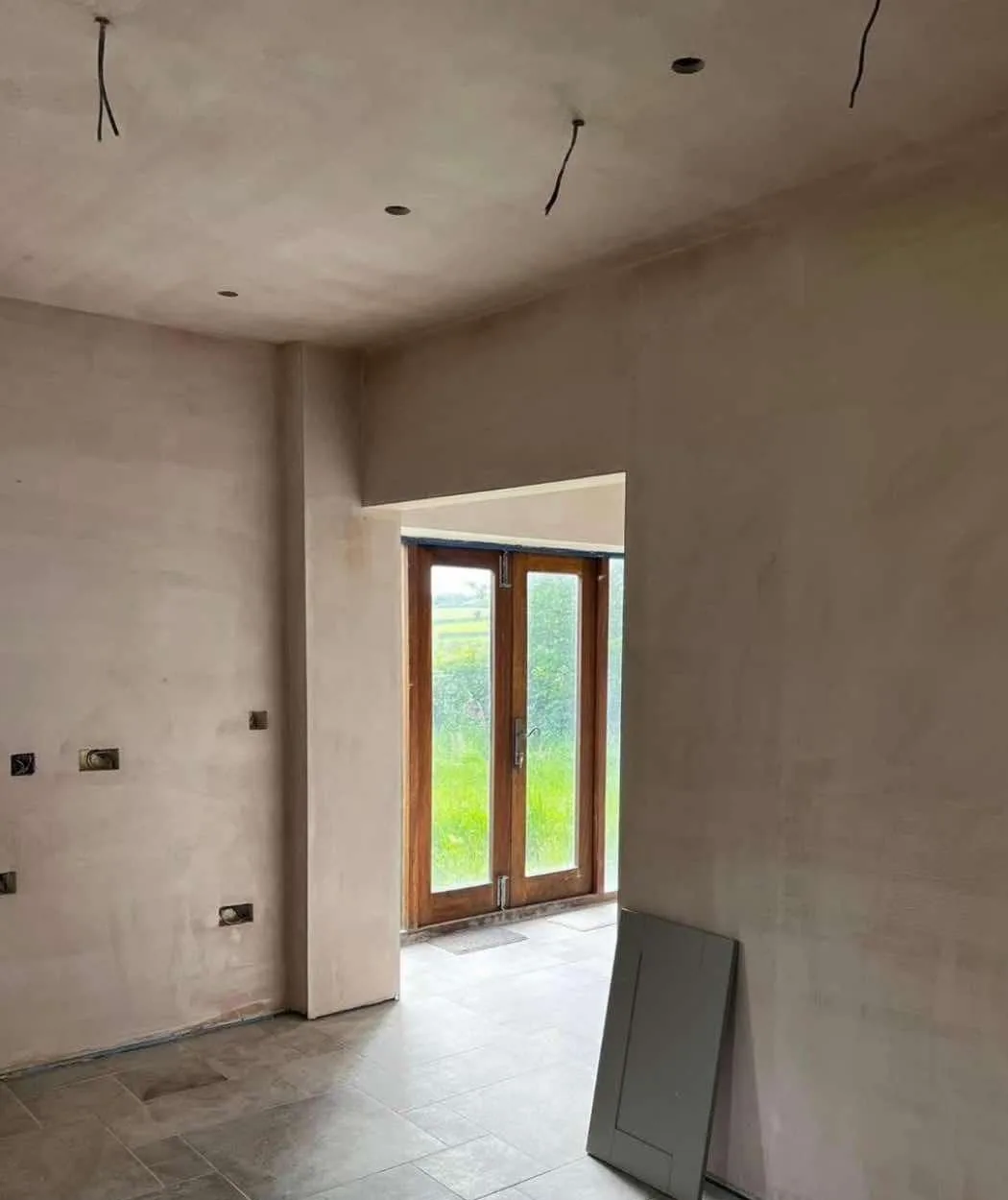 Full wall finish
Plastering after rewiring
Plastering follows the electrician’s first-fix work. We carry out the plastering and surface preparation only; electrical installation, testing and certification remain the electrician’s responsibility.
Tell us about your projectElectrical rewiring can involve access to walls and ceilings for cables, back boxes and other fittings. Once the electrician’s work is complete, the routes and openings may leave channels, broken edges or patches that need making good before decoration. The amount of plaster work varies with the condition of the original surface and how much has been disturbed.
Signature Plastering carries out the plastering and making good after electrical alterations. We do not install, test or certify electrical systems. The electrician remains responsible for the wiring, cable positions, back boxes and electrical safety; plastering is planned after the relevant first-fix work is complete.
A local repair may suit isolated chases when the surrounding plaster is sound and the affected area is limited. When a wall contains several long channels, many patches or wider damage, separate repairs can leave a visibly uneven surface. In those cases, a full-wall skim may be considered after the chases are properly prepared and filled.
There is no single answer for every rewire. The wall’s age and condition, the depth and spread of the chases, previous coatings and the finish you want all matter. See plaster repairs for local damage and plaster skimming for a continuous finishing coat over a suitable prepared wall.
May suit limited chases where the adjacent plaster is stable and the repair can be finished appropriately.
May be considered where disturbance is widespread or a more even wall finish is wanted.
Wait until the electrician has completed the relevant first-fix work and confirmed the cable routes, back boxes and openings are ready to be covered. Do not ask a plasterer to conceal loose or exposed wiring, incomplete connections or work that the electrician still needs to inspect. Any electrical changes, testing or certification must be completed by the electrician.
Before plastering, agree the extent of the repair and show where the chases and fittings are. Photos taken before the work is covered can help retain a record of cable routes. If the rewire is being phased room by room, discuss access and timing with the electrician so plastering does not obstruct unfinished electrical work.
Plastering can create dust and requires the working area to be accessible. Move small items and wall hangings away where possible, and discuss furniture, floor protection and access before the job. The amount of preparation depends on how many rooms are affected and how much surface needs repair.
Discuss timing with your electrician and decorator so completed plaster is not reopened and has time to dry before painting. We can discuss the plastering sequence with you and the other trades, but electrical scheduling and any electrical work remain outside our service. Decorating should wait until the repair or skim is fully dry and ready for the chosen finish.
The repair starts with the condition of the surrounding plaster. Loose edges, hollow areas and flaking coatings need attention before a chase is filled. Deeper channels need a suitable repair build-up for their depth and background; a thin skim alone is a finishing layer and should not be expected to fill a deep opening. Preparation and materials are selected for the surface rather than treating every chase the same.
Around socket and switch positions, the aim is to restore the plaster to the agreed finished level without burying the back box or blocking the space needed for the electrician’s fittings. Electrical positions and access must be confirmed by the electrician first. If a wall is loose or uneven beyond the chase, wall plastering may be needed as part of a wider scope. For rewiring across several rooms, discuss the repairs within a whole-house plastering plan.
The number of rooms, length and depth of chases, number of socket or switch areas, condition of the surrounding plaster and whether local repairs or a full-wall skim are required all affect the work. Ceiling penetrations, awkward access, existing loose plaster and the requested finish can add preparation.
For a useful first discussion, provide your postcode, room list, photos, approximate wall areas and whether first fix is complete. Mention if other trades have opened up the walls or if a previous repair has failed. A site visit may be needed where the extent or substrate cannot be assessed from photographs.
Repair materials and new plaster need to dry fully before decorating. The time depends on material, depth, background, room temperature and ventilation, so avoid booking a painter to a fixed date before the surface is assessed. Follow product guidance and allow steady ventilation rather than forcing the repair dry with strong heat.
Once the plaster is dry, the decorator can prepare and paint the repaired or skimmed areas. A local repair may remain visible under certain light or against older paint; a wider finish and repaint may be needed if a consistent wall appearance is important.
Good to know
Practical answers before you arrange a quote.
Check your electrician’s quote to see whether plaster repairs are included or need arranging separately. Signature Plastering makes good plaster after electrical work, once the relevant first fix is complete and the electrician confirms the area is ready.
We can discuss making good chases after the electrician has completed and checked the first-fix work. Cables must be correctly positioned and the electrical work ready to be covered; plastering does not include wiring or testing.
Not always. Isolated chases may be repaired locally if the surrounding plaster is sound. Widespread channels or patching may make a full-wall skim more suitable for an even finish.
After the relevant first-fix work is finished, cable and back-box positions are final, and the electrician confirms the area is ready to be covered. Coordinate this before second-fix fittings and decorating.
The quote depends on the number of rooms, extent of chases, wall condition, access and whether local repairs or a full-wall skim are needed. Photos and a room list help explain the work.
Wait until the repair or skim is fully dry. Drying depends on material, thickness, background and room conditions, so follow product guidance rather than a fixed number of days.
Start a conversation
Send your postcode, photos of the affected walls, the number of rooms, and whether the electrician has completed first fix. Mention any larger areas of damaged or loose plaster.