
Skimming
A finish coat on a stable, suitable textured surface after appropriate preparation.
Signature Plastering Leeds
Want to update a textured ceiling? Signature Plastering provides Artex ceiling covering in Leeds. The existing coating and ceiling must be assessed before a suitable covering approach can be agreed.
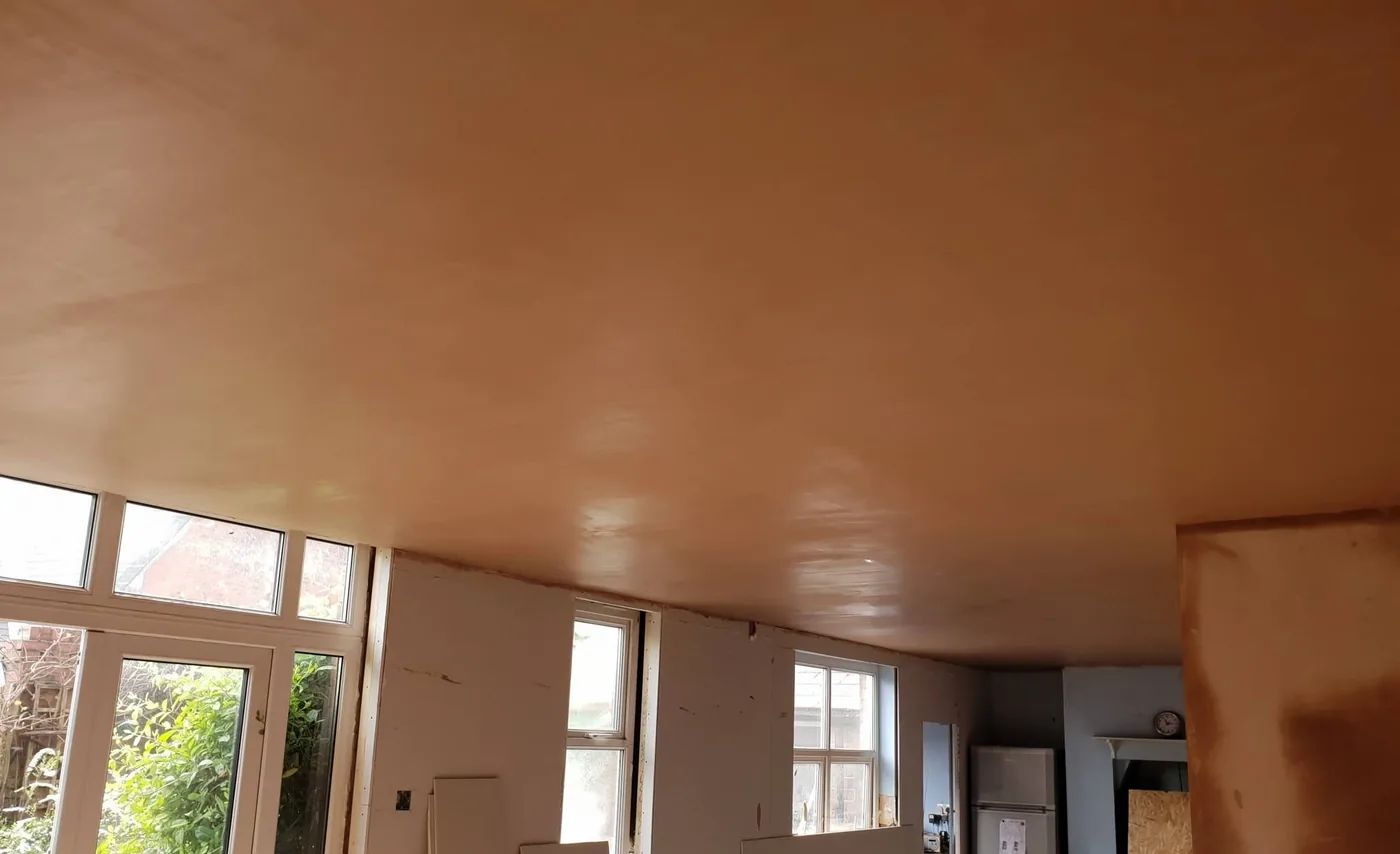 Smooth ceiling finish
Artex ceiling covering
Skimming and overboarding are different ways to cover a ceiling, and neither should be chosen from appearance alone. Condition, support, ceiling details and the status of any older textured coating all matter.
Tell us about your projectArtex is a familiar name for a textured ceiling coating. Patterns can make an otherwise sound room feel dated, collect dust in their high points and make a ceiling harder to redecorate evenly. Covering the texture can create a flatter surface for a more contemporary finish, but the coating and ceiling must be assessed before a method is selected.
The work is not simply a case of applying plaster over any pattern. The existing coating needs to be stable, the ceiling must be suitable for additional material, and the edges, fittings and height of the finished surface need to be considered. Read about ceiling plastering and ceiling overboarding for more about those separate services.
Skimming applies a plaster finish over a suitable, prepared existing ceiling. It can be considered where the coating is firmly attached, the texture and ceiling condition allow preparation, and the resulting build-up is appropriate. Deep or pronounced patterns, loose coating or a weak background may make a skim unsuitable without further work.
Overboarding fixes a new plasterboard layer to suitable supports before the joints and surface are finished. It can be considered where the existing finish is not a suitable base for skimming, but it adds thickness and changes the details at light fittings, hatches, coving and room edges. The supporting ceiling and the fixing route need to be checked; overboarding is not automatically suitable for every ceiling.
A finish coat on a stable, suitable textured surface after appropriate preparation.
A new board layer where the ceiling support, extra depth and details make it suitable.
Older textured coatings may contain asbestos. The risk depends on the material and its history; appearance alone cannot confirm whether asbestos is present. Do not scrape, sand, drill or otherwise disturb a coating that may contain asbestos. If you suspect it could be present, arrange appropriate assessment by a competent asbestos professional before any work that could disturb it.
Signature Plastering does not provide asbestos testing or specialist asbestos removal. Work should only be considered once the coating’s status and suitable precautions are clear. This matters for both skimming preparation and overboarding, because either approach may involve contact with or fixing through the existing ceiling. The HSE explains that textured coatings can contain asbestos and should be approached with care. HSE guidance on asbestos materials.
Once the ceiling has been assessed and the approach agreed, preparation is planned around the surface and room. The scope may need to account for loose material, ceiling edges, coving, loft hatches, light positions, ceiling height and access. Any electrical fitting that needs isolating or removing must be dealt with by an electrician where required; plastering does not include electrical work.
Ceiling plastering can create dust and requires access to the whole working area. Clear smaller items and discuss furniture, floor protection and room use before the appointment. For overboarding, the support and fixing arrangement, board layout and finished depth need attention. For skimming, the base must be suitably prepared. The agreed method determines the actual sequence and preparation required.
A quote depends on the ceiling area, height and access, the texture and condition of the coating, and whether the agreed approach is skimming or overboarding. Preparation, ceiling edges, coving, hatches, light fittings and the amount of protection required can also affect the work. If the surface is loose, damaged or has a history of water ingress, mention it before a method is chosen.
For an initial discussion, send your postcode, room dimensions if known, a description of the pattern and any information you have about the ceiling’s age or previous work. Do not take a sample or disturb the coating to provide photographs. If asbestos may be present, arrange professional assessment first and share the relevant information once it is available.
A plaster finish needs to dry fully before decoration. Drying time varies with the materials, thickness, background, room temperature and ventilation, so a fixed number of days cannot be promised for every ceiling. Allow steady ventilation and follow the plaster and paint manufacturers’ instructions before applying a first coat.
If the ceiling has been overboarded, check that any agreed finishing work is complete and dry before decorating. Plan around fittings and room use, and avoid using intense direct heat to force plaster dry. We can discuss the expected sequence for the particular job when the scope is agreed.
Good to know
Practical answers before you arrange a quote.
Sometimes. Skimming may be suitable when the coating is stable, the texture and ceiling can be prepared, and the coating’s status is understood. An assessment is needed before deciding; a skim is not appropriate for every textured ceiling.
Neither is always better. Skimming adds a finish to a suitable prepared surface. Overboarding adds a new board layer and changes the ceiling depth. The pattern, condition, support and room details determine which can be considered.
Some older textured coatings may contain asbestos. Appearance alone cannot confirm this. Do not disturb a coating you suspect may contain asbestos; arrange assessment by a competent asbestos professional before work that could affect it. Signature Plastering does not offer testing or asbestos removal.
The aim is a smooth plaster finish, but the result depends on the existing ceiling, chosen method, preparation and detailing. The ceiling should be assessed and the work scope agreed before a finish is promised.
Cost depends on ceiling size, height, access, coating condition, preparation, fittings and whether skimming or overboarding is suitable. Share your postcode, room size and ceiling details for a quotation discussion.
Wait until the new plaster is fully dry. Timing depends on the material, thickness, room conditions and ventilation; follow the product guidance rather than relying on a fixed number of days.
Start a conversation
Share your postcode, room dimensions if known, what the ceiling is like and whether you know when the coating was applied. Do not scrape, sand or drill an older textured coating to prepare it for a quote.