
Fixing
The board needs appropriate support and a suitable fixing approach.
Signature Plastering Leeds
Overboarding adds a new plasterboard layer over an existing ceiling before a plaster finish is applied. For ceiling overboarding in Leeds, the existing construction, fixing points, added depth and condition all need to be considered before this approach is chosen.
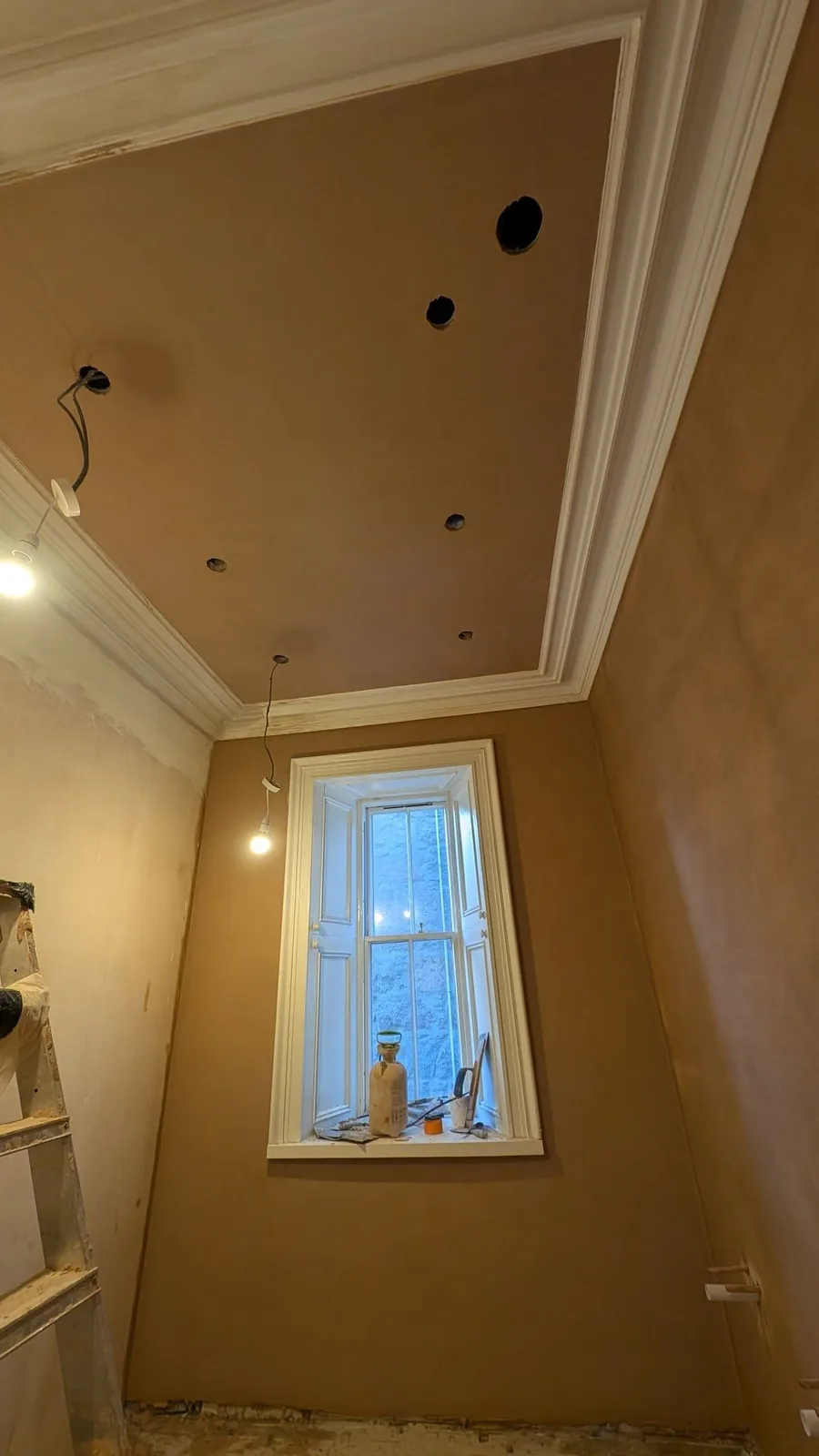 Plastered ceiling finish
Ceiling overboarding
A new layer is only appropriate when the supporting structure and ceiling details can accommodate it. Loose, sagging, damp or damaged ceilings need assessment; covering them does not make an unsuitable base sound.
Tell us about your projectOverboarding means fixing new plasterboard over an existing ceiling using suitable fixings into appropriate support, then preparing the boards for a plaster finish. The fixing method and layout depend on the ceiling construction and the board system being used.
It can avoid removing an existing surface in some situations, but it adds weight and reduces the room’s headroom. The existing ceiling, support and any services above it should be considered before the method is agreed.
For the specific aim of smoothing a textured ceiling, see Artex ceiling covering. For broader board installation work, explore plasterboarding and dry lining.
Overboarding should not be used to hide a ceiling that is sagging, moving, wet or detached. The new layer needs reliable support; simply fixing into an unknown or weak surface is not a sound basis for the work.
The extra thickness can affect coving, loft hatches, smoke alarms, vents, pendant drops and the alignment of adjoining ceilings. Lighting or electrical fittings may need changes by a suitably qualified electrician. Include these features in the initial discussion.
The board needs appropriate support and a suitable fixing approach.
Added depth may affect edges, openings and fitted features.
Moisture, sagging or movement needs attention before covering.
Skimming adds a new finish coat to a suitable existing surface. Overboarding creates a new board surface and needs an appropriate plaster finish. Removing the ceiling is a separate option where access to the ceiling void or the condition of the existing build-up makes removal necessary.
Which route makes sense depends on the ceiling and the desired result. See ceiling plastering and plaster skimming for related options.
For a sound ceiling that can take a prepared finish coat.
For a suitable structure that can support another board layer.
For a different scope where the existing ceiling must come down.
Some textured decorative coatings, including some Artex, may contain asbestos. The Health and Safety Executive lists textured coatings on walls and ceilings as a material where asbestos may be found in buildings built or refurbished before 2000.
Do not sand, scrape, drill or otherwise disturb an unknown coating. Covering it is not a substitute for assessment or appropriate precautions. If the ceiling’s composition is uncertain, get advice from a competent asbestos professional before work is planned.
The ceiling area and height, access, existing construction, condition of its support, fixings, fittings, edge details and the plaster finish all affect the scope. So can the need to protect the room or coordinate electrical work.
Send your postcode, room dimensions, a description of the ceiling and clear photographs from different angles. Include any known repairs, sagging, water damage or textured finish so the initial discussion can focus on the right questions.
Once the boards are secure, joints, edges and the board surface need preparation before the plaster finish is applied. New plaster must dry fully before painting, with drying affected by coat thickness, room conditions and ventilation.
Allow steady ventilation rather than applying strong direct heat, and follow the product guidance for decorating. Confirm that fittings and other ceiling details are ready for the new finished level before the room is put back into use.
Good to know
Practical answers before you arrange a quote.
No. Suitability depends on the ceiling’s construction, support, condition, fittings and the added depth. Sagging, damp or unstable ceilings need assessment rather than being covered.
No. Skimming adds a finish coat to a suitable existing surface. Overboarding adds new plasterboard and changes the ceiling depth before finishing.
Yes, it adds a layer, so the finished ceiling will be lower by the board and finish depth. The effect on coving, hatches, lights and vents should be considered.
Some textured coatings may contain asbestos, particularly in older buildings. Do not disturb or drill through an unknown coating; obtain suitable assessment and advice before planning work.
The new ceiling depth may affect electrical fittings. Any isolation, removal or adjustment should be discussed and carried out by a suitably qualified electrician where required.
The plaster finish must be fully dry first. Drying depends on room conditions and thickness, so follow the plaster and paint product guidance rather than a fixed schedule.
Start a conversation
Send your postcode, ceiling dimensions, a description of the existing finish, and details of lights, coving or visible damage. Mention any textured coating and do not disturb an unknown material.