
Sound but dated
A prepared existing ceiling may be suitable for a skim finish.
Signature Plastering Leeds
Cracks, loose plaster and uneven finishes can make a ceiling stand out across an otherwise refreshed room. Signature Plastering carries out ceiling plastering in Leeds, with the method chosen around the ceiling’s condition, construction and the finish you want.
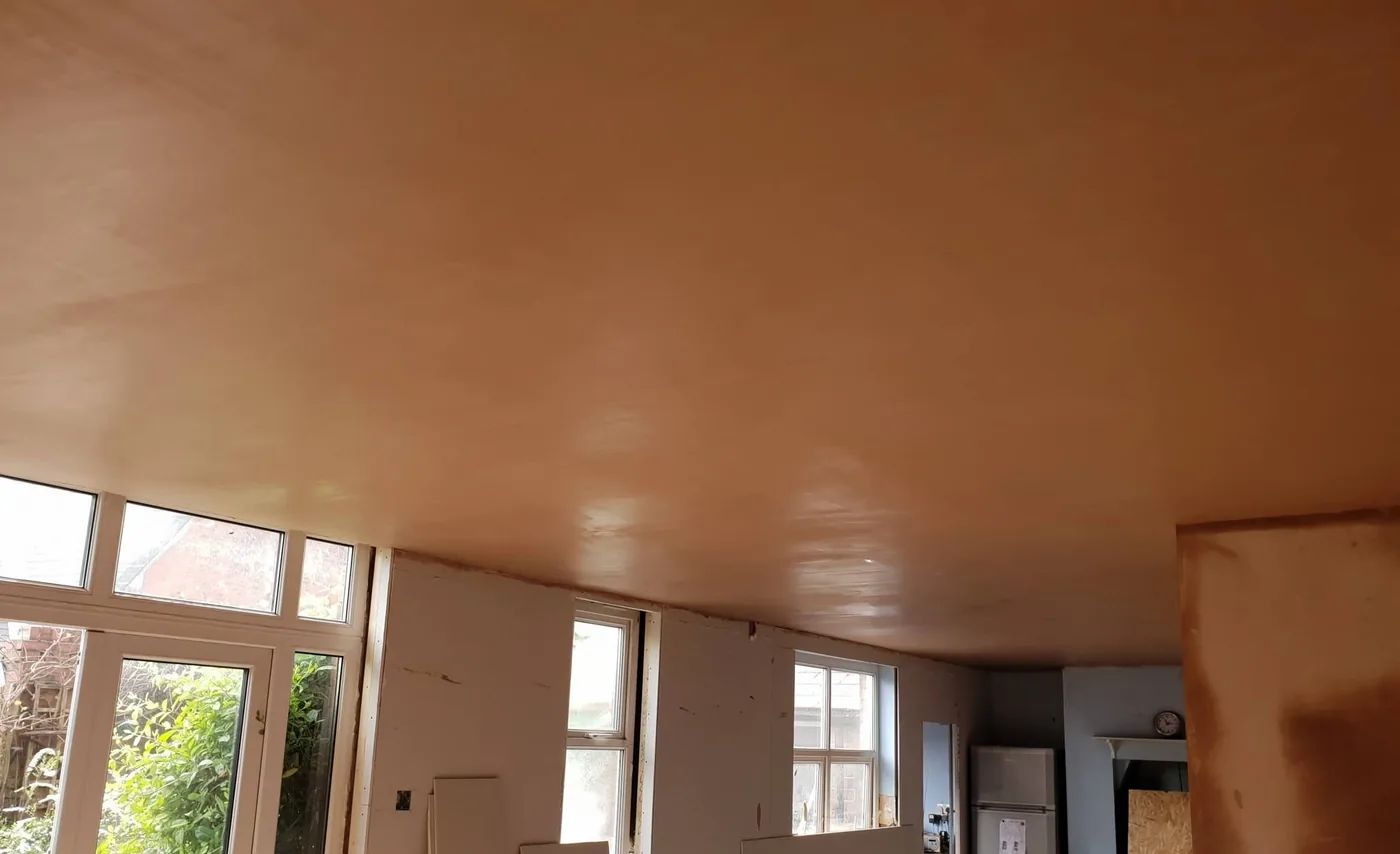
Ceiling plastering
A ceiling that only needs a new finish is a different job from one with loose plaster, water damage or a weak background. Establishing what is above and around the surface helps decide whether a repair, skim or overboarding should be considered.
Tell us about your projectA sound ceiling with an unattractive finish may be suitable for skimming. Local damage can sometimes be repaired, while loose or widespread failure needs closer assessment. Overboarding may be an option where the ceiling construction can support another layer and the extra depth works with the room.
A new plaster finish will not solve a leak, ongoing movement or an unstable ceiling. If you have water staining, a recurring crack or a sagging area, explain what you have noticed before deciding on a finish.
For textured surfaces, read about Artex ceiling covering before choosing a ceiling finish.
A prepared existing ceiling may be suitable for a skim finish.
A local repair may work if the surrounding plaster is firmly attached.
Loose areas, sagging or movement need assessment before covering.
Preparation depends on the existing coating, ceiling height, access and the condition of the plaster or boards. Fittings, coving, loft hatches and ceiling edges can affect how the work is set out and finished. Electrical fittings should be isolated or removed by a suitably qualified electrician where required; agree this before work begins.
Ceiling work can affect the room below. Discuss what needs to be moved or protected and whether other trades must finish first. Where a leak has caused damage, the source should be fixed and the affected area allowed to dry before replastering is considered.
Skimming adds a finishing coat to a suitable, prepared ceiling. A repair is more localised and is appropriate only when the surrounding ceiling is sound. Overboarding fixes new plasterboard to a suitable support and changes the ceiling depth; it is not simply another name for skimming.
The ceiling’s construction and condition determine which option can be considered. Read about ceiling overboarding, plaster skimming and plaster repairs for the differences.
Refreshes a suitable existing surface with a new finish coat.
Addresses a defined damaged area where the base around it remains sound.
Adds a board layer where the support, height and details allow it.
A quote depends on the ceiling area, height, access, existing surface, preparation and extent of repair. Fittings, coving, rooflights, awkward edges and the need to coordinate other trades can also change the work involved.
For an initial discussion, send your postcode, the room, approximate dimensions and a description of the ceiling. If there is a textured coating of unknown age or composition, mention it and do not disturb it before suitable assessment.
New plaster needs to dry fully before it is painted. Drying time depends on the plaster thickness, background, temperature and ventilation, so the surface colour alone or a fixed number of days should not be treated as a guarantee.
Allow steady ventilation and follow the plaster and paint manufacturers’ instructions for preparation and first coats. Avoid using strong direct heat to force the ceiling dry.
Good to know
Practical answers before you arrange a quote.
Often, if the ceiling is firmly attached and can be prepared for a new finish. Loose, damp, badly cracked or unstable areas need attention first.
It depends on the cause and condition around the crack. A surface finish will not correct movement or loose plaster, so recurring cracks or sagging should be assessed before covering.
Overboarding may be considered when the existing finish is unsuitable but the supporting structure can accept a new board layer. It changes ceiling depth and can affect fittings and edges; the construction should be checked first.
The source of the water should be fixed and the affected materials allowed to dry before a plaster finish is planned. Covering a damp area can leave the cause unresolved.
There is no dependable fixed period. Thickness, room conditions and ventilation affect drying. Wait until it is fully dry and follow suitable product guidance before decorating.
Some fittings may need to be isolated or removed to prepare and finish around them. Electrical work should be agreed and handled by a suitably qualified electrician where required.
Start a conversation
Share your postcode, room dimensions if known, ceiling condition and any visible damage or fittings. Photos can help explain the job before the scope is discussed.